Break-Even ROAS: The One Number to Know Before You Scale Meta Ads
A 3x ROAS can still lose money. Here's how to work out the ROAS your business actually needs, and how to use it to decide when to scale.
Most business owners judge their Meta ads by one number: ROAS. A 3x return sounds great. But a 3x ROAS can still lose money, and a 1.8x ROAS can be very profitable. It all depends on your margins.
Before we spend a dollar on a new account, we work out one number first: break-even ROAS. It tells you the point where your ads stop costing you money and start making it.
What ROAS actually measures
ROAS (return on ad spend) is revenue divided by ad spend. Spend $1,000, get $3,000 in attributed sales, and your ROAS is 3.0.
The problem is that revenue isn't profit. That $3,000 still has to cover the product itself, shipping, payment fees, packaging, returns, and the software you run your store on. ROAS ignores all of it.
How to calculate break-even ROAS
The formula is simple:
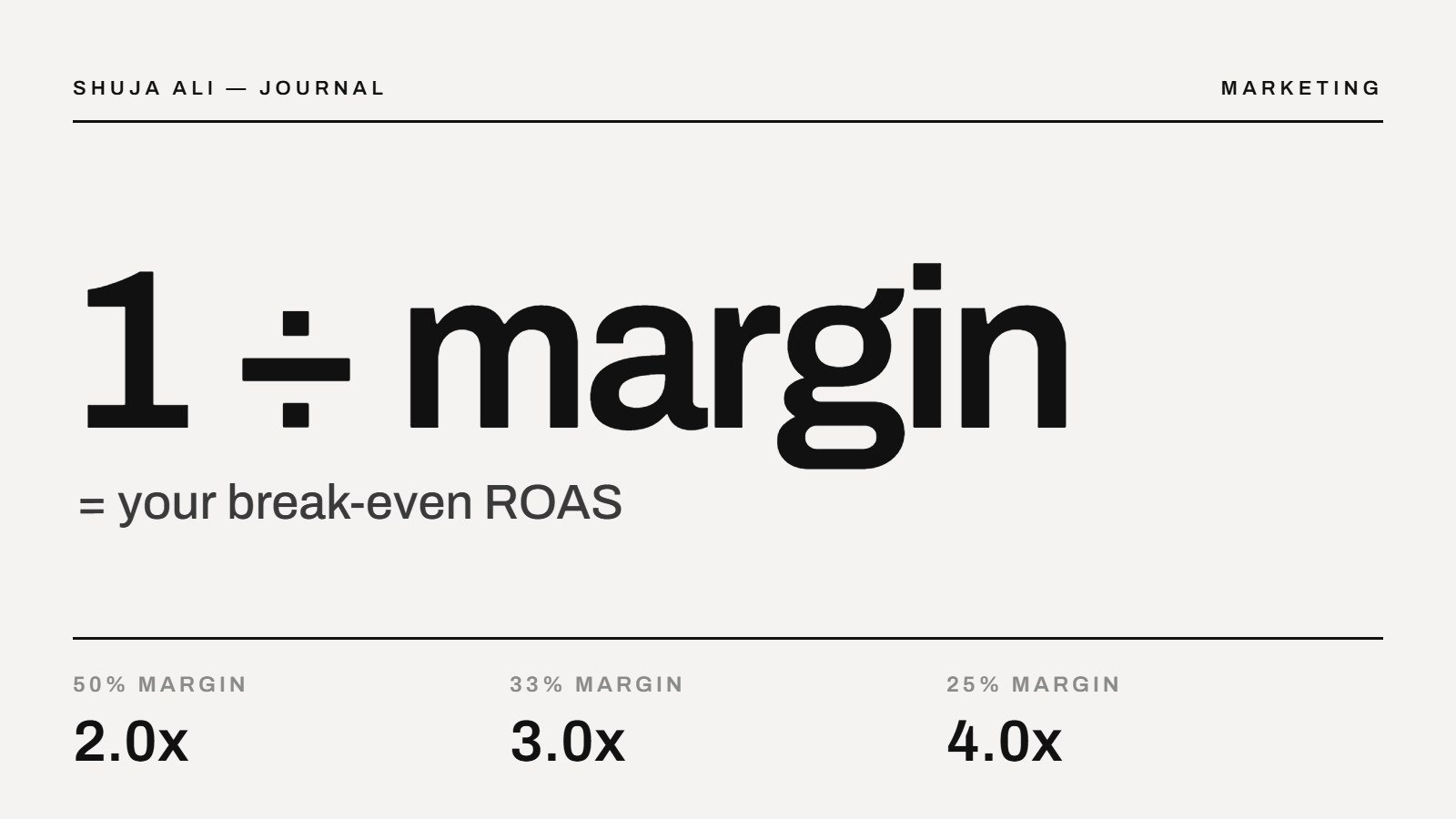
Break-even ROAS = 1 ÷ contribution margin
Your contribution margin is what's left from each sale after the variable costs of that sale, before ad spend. Here's a quick example:
- Selling price: $100
- Product cost: $30
- Shipping and packaging: $12
- Payment fees and returns: $8
- Contribution margin: $50, or 50%
Break-even ROAS = 1 ÷ 0.50 = 2.0
Below a 2.0 ROAS, every sale loses money. At 2.0, you break even. Above it, you profit. If your margin were 25%, you'd need a 4.0 ROAS just to break even, and that "great" 3x campaign would be quietly burning cash.
Set a target, not just a floor
Break-even is the floor. Your target ROAS should leave room for the profit you actually want to keep.
If you want to keep $20 profit on that $100 sale, you can afford to spend $30 on ads to get it ($50 margin minus $20 profit). That's a target ROAS of 100 ÷ 30 = 3.3.
This is the number we agree on with clients before launch. It turns "are the ads working?" from a feeling into a yes or no.
When first-order ROAS isn't the full picture
If customers buy again, the first order isn't the whole story. A subscription brand can accept a lower first-purchase ROAS because each customer is worth several orders over their lifetime.
For one supplement brand we work with, we judged acquisition cost against lifetime value instead of the first order. That gave us room to keep acquiring customers even when a campaign ran at a negative return on the first sale. You can read how that played out in the CleanFit case study.
Just be honest about it. Use real repeat-purchase data, not hopes. If you don't have that data yet, plan around the first order.
Use it to decide when to scale
Once you know your numbers, scaling decisions get much easier:
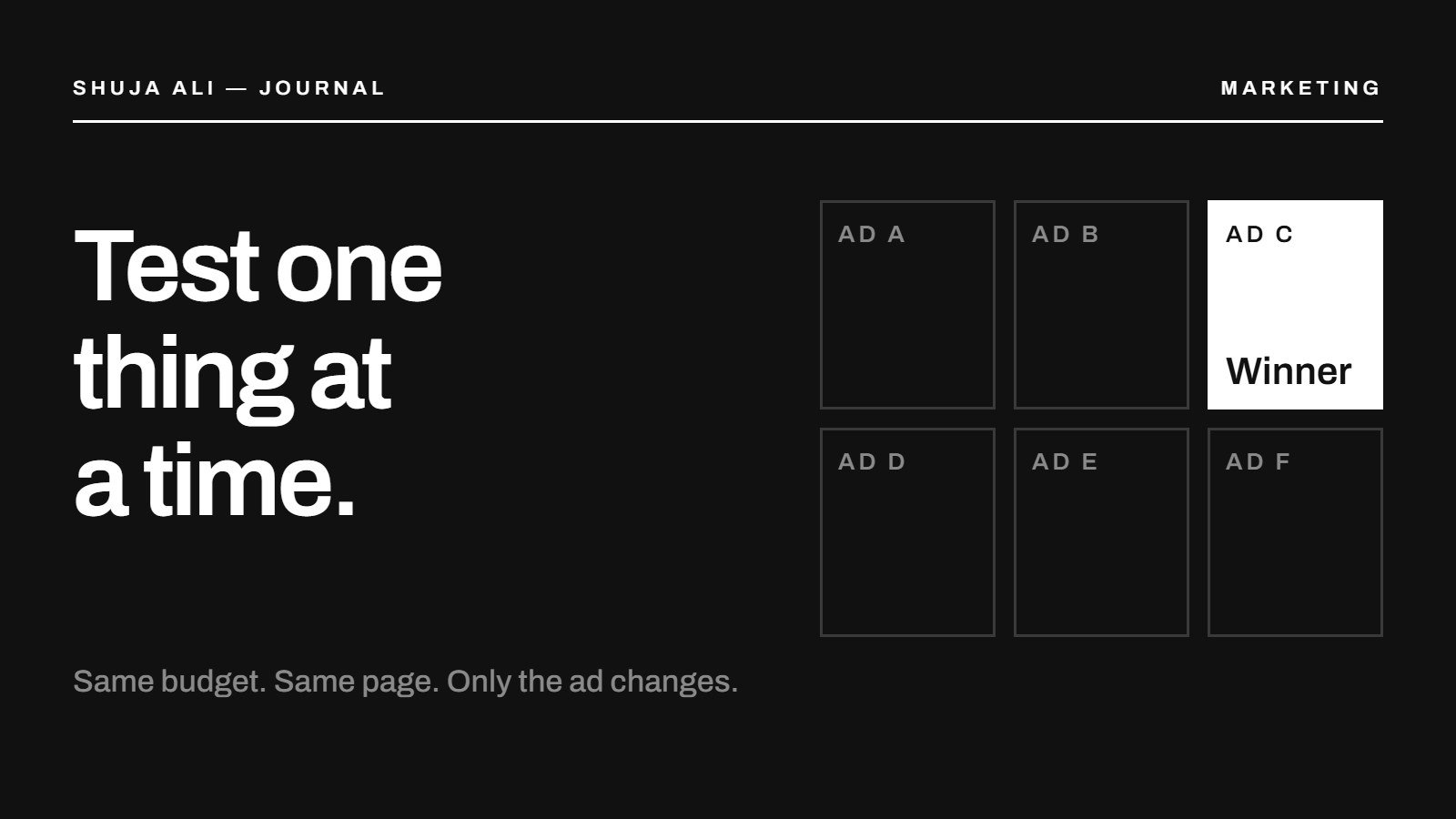
- Above target: raise the budget slowly, 10 to 20% every few days, and watch whether ROAS holds.
- Between break-even and target: keep the budget steady and test new creatives or offers.
- Below break-even: don't scale. Fix the creative, the offer, or the landing page first.
The takeaway
Ads Manager will happily tell you your ROAS. It won't tell you whether you made money. Work out your break-even and target ROAS before you scale, and every decision after that gets simpler.
If you'd like help working out these numbers for your business, book a free 15-minute strategy call.